When Strategic Giving Loses Alignment and How to Recenter It
Most of the families I work with are already generous and already strategic.
They understand tax efficiency. They use sophisticated giving vehicles. They have thought carefully about timing, assets, and outcomes. From the outside, their charitable giving looks well designed.
What is often missing is not knowledge.
It is coherence.
Giving strategy, tax planning, estate design, and family formation tend to evolve in parallel but rarely in conversation with one another. Over time, that separation creates friction. Not obvious inefficiency, but subtle drift. The kind that only becomes visible when families pause long enough to ask whether their generosity is truly aligned.
The question is not whether you are giving wisely.
It is whether your generosity is integrated.
Why Tax-Efficient Giving Needs Alignment
Sophisticated tax strategies are powerful, but only when they serve a clearly articulated Kingdom intent.
When tax optimization becomes the driver rather than the servant, generosity can quietly lose its center. Decisions get made for efficiency rather than conviction. Habits persist long after the original purpose fades. Structures remain, but meaning thins.
Integrated stewardship treats tax planning as infrastructure, not identity. It ensures that every giving vehicle, no matter how advanced, reinforces the same underlying commitments.
The goal is not to minimize taxes.
It is to preserve clarity as complexity increases.

The Hidden Risk for Savvy Givers: Fragmentation
Here is the paradox many high-capacity givers encounter. The more sophisticated the structures, the easier it becomes to outsource meaning.
Giving decisions move to platforms. Estate plans move to documents. Family conversations get deferred. Over time, generosity still flows, but formation slows.
Children inherit vehicles without understanding values. Heirs receive responsibility without context. What began as deeply intentional stewardship risks becoming procedural.
This is not a failure of generosity.
It is a failure of integration.
- This is often the moment families begin asking better questions, not about which tax strategies to use, but how to ensure those strategies serve a coherent Kingdom vision.
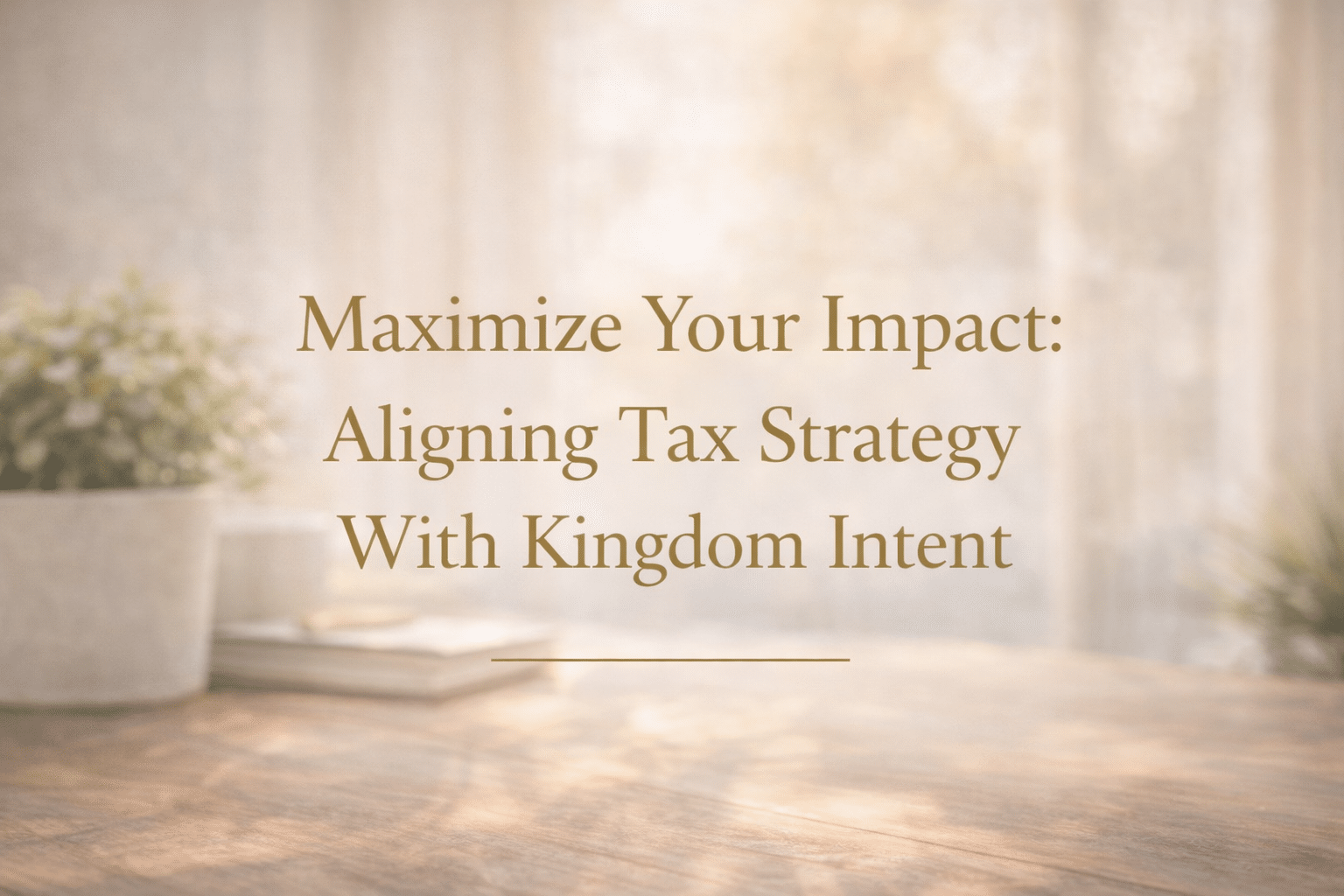
- For families in that place, we created Maximize Your Impact: Tax Strategies to Amplify Kingdom Giving, a practical guide designed to help align tax-efficient giving, estate planning, and long-term stewardship.
Estate Planning as Continuity, Not Control
For families thinking generationally, estate planning is less about preservation and more about transmission.
Well-designed charitable provisions do not simply allocate assets. They encode priorities. They signal what mattered enough to plan for. When aligned with active giving practices, estate plans reinforce lived values rather than replacing them.
The most effective legacy plans do not introduce generosity at the end of life.
They echo what was already true.
Re-Center Before You Refine
Before adding complexity or revisiting structures, the most mature families return to first principles.
What Kingdom work are we entrusted to support across seasons?
Which assets are best suited for generosity and which are meant for flexibility or provision?
How are our children learning how decisions are made, not just what we give?
These questions do not slow momentum.
They prevent drift.
Stewardship That Holds Together
You do not need new tax tools.
You need alignment.
When tax strategy, charitable giving, estate planning, and family formation reinforce one another, generosity becomes lighter, not heavier. Decisions simplify. Tradeoffs become intentional. Impact compounds quietly over time.
This is what Kingdom stewardship looks like at maturity. Not louder or more complex, but deeply integrated.

A Practical Next Step
If you are already giving strategically but want to ensure your generosity is working together, across tax planning, legacy design, and family conversations, Maximize Your Impact: Tax Strategies to Amplify Kingdom Giving was created for this exact moment.
The guide helps families:
- pressure-test existing giving structures
- identify quiet misalignments before they calcify
- and re-anchor generosity in a coherent Kingdom framework
You can access the guide here and engage it at a pace that honors both wisdom and discernment.