
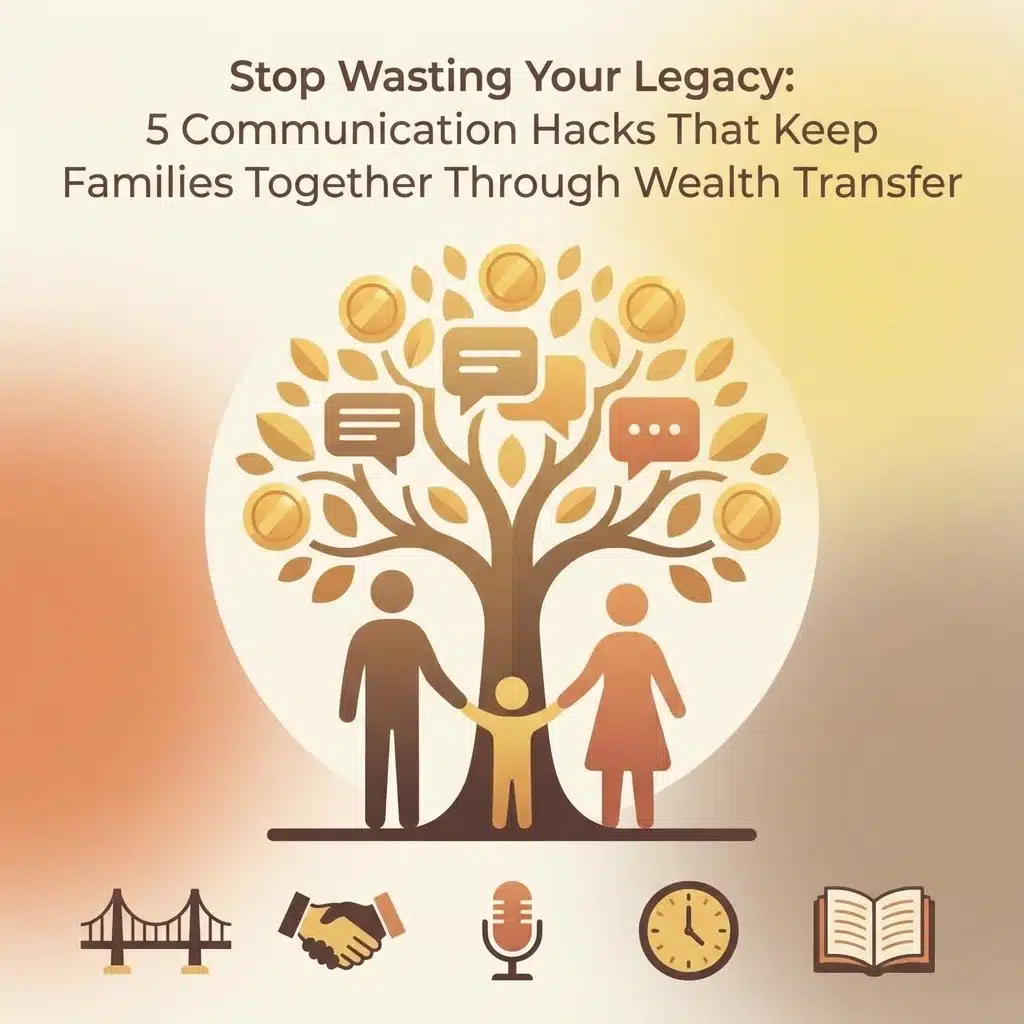
Stop Wasting Your Legacy: 5 Communication Hacks That Keep Families Together Through Wealth Transfer
It’s not bad investments, market swings, or even poor planning. It’s the conversations that never happen about money.
I’ve seen families carry unnecessary fractures—around inheritance, money, and identity—simply because honest conversations came too late or not at all. I’ve watched children grow up either entitled or fearful, and I’ve seen scarcity passed down through silence, when parents kept their struggles, sacrifices, and values to themselves instead of sharing the story behind what they built.
The good news? Communication is a skill you can master. And when you do, it becomes the bridge that carries your family’s legacy safely across generations.
If you’re ready to stop gambling with your family’s future and start building lasting unity around your wealth, these five communication strategies will transform how your family navigates money, values, and legacy together.
Hack #1: Start the Conversation Before You Need To
Most families wait until crisis forces their hand. A health scare, a business sale, or a family conflict suddenly makes wealth transfer urgent: and urgent conversations rarely go well.
Start talking about money and values when the pressure is off. This doesn’t mean diving into estate planning documents with your 16-year-old. It means creating a culture where money conversations are normal, not taboo.
Begin with your family’s origin story. How did you build your wealth? What sacrifices were made? What values guided your decisions? These stories help the next generation understand that wealth isn’t just numbers: it’s the fruit of purpose, hard work, and God’s provision.
Make it regular and age-appropriate. Young children can learn about giving, saving, and stewardship. Teenagers can understand business principles and investment basics. Young adults can engage with more complex family financial discussions. The goal isn’t to overwhelm: it’s to normalize.
When money conversations become part of your family rhythm rather than emergency meetings, trust builds naturally. Your children learn that money isn’t something to be feared or hidden, but stewarded responsibly for kingdom impact.
Hack #2: Create Psychological Safety Around Money Talk
Money conversations trigger deep emotions: fear, shame, entitlement, inadequacy. Without psychological safety, these emotions hijack productive dialogue and turn family meetings into battlegrounds.
Establish ground rules that protect everyone’s dignity. No interrupting. No judgment about past financial mistakes. No shaming someone for not knowing something. Everyone gets heard.
Start with values before dollars. Ask questions like: “What does generosity look like in our family?” “How do we want to use our resources to honor God?” “What legacy do we want to leave for future generations?” When you align on values first, specific financial decisions become easier to discuss.
Address the elephant in the room directly. Acknowledge that talking about money feels awkward. Normalize the discomfort. Remind everyone that these conversations come from love, not control. The goal is family unity, not financial conformity.
Our family learned this lesson when we asked our kids about year-end giving—were there ministries or people in need they wanted to support? Our oldest, then five, looked up and asked: “Why do we give our money away?” It wasn’t a difficult question, but it revealed something crucial: we’d been modeling generosity without teaching the why behind it. That moment became an opportunity to explain biblical stewardship—that everything we have comes from God, and giving isn’t losing something, it’s partnering with Him to advance His Kingdom.
Hack #3: Lead with Questions, Not Lectures
The fastest way to shut down communication is to make wealth transfer feel like a one-way download of your expectations and plans. Instead, ask questions that invite genuine dialogue.
“What are your dreams for your life and career?” “How do you see yourself using money to make a difference?” “What aspects of managing wealth feel exciting or scary to you?” “How can our family’s resources support your calling?”
Listen to understand, not to correct. Your children’s perspectives might surprise you. Maybe your son wants to be a teacher instead of joining the family business: and that’s not a problem to solve, it’s a calling to support. Maybe your daughter has innovative ideas about social impact investing that could enhance your family’s giving strategy.

Questions create ownership. When heirs help shape the family’s wealth philosophy rather than just inheriting predetermined rules, they’re more likely to embrace their stewardship role with enthusiasm rather than resentment.
Document their responses. Show them their voices matter by incorporating their insights into your family mission and wealth management approach. This isn’t about giving children veto power over your decisions: it’s about honoring their perspectives as you prepare them for future responsibility.
Hack #4: Educate Before You Delegate
You can’t effectively manage what you don’t understand. Yet many wealthy families transfer assets before transferring knowledge, setting the next generation up for poor decisions or dependence on advisors who may not share their values.
Financial education isn’t just about investment principles and tax strategies. It’s about developing the character and wisdom to handle significant resources responsibly. This includes understanding the spiritual implications of wealth, the importance of giving, and the responsibility that comes with privilege.
Start with foundational principles: budgeting, saving, investing, giving. Move to more complex topics: business operations, estate planning, tax implications, charitable giving strategies. Layer information gradually based on age, interest, and demonstrated responsibility.
Involve your children in real decisions when appropriate. Let them sit in on meetings with your financial advisor. Include them in discussions about family giving. Show them how you evaluate investment opportunities. Experience teaches what textbooks cannot.
Consider formal financial education programs designed for wealthy families. Many family offices and faith-based organizations offer curricula that address both the practical and spiritual aspects of wealth stewardship.
Hack #5: Align Action with Values Through Storytelling
Numbers tell you what happened, but stories tell you why it matters. The most powerful communication tool you have isn’t your portfolio performance or estate planning documents: it’s your family’s story of faithful stewardship.
Share stories of how God provided during difficult seasons. Tell them about the business decisions you made based on biblical principles, even when they cost you financially. Describe the joy you’ve experienced through generous giving. Help them see wealth as part of God’s story, not just your success story.
Be vulnerable about your mistakes too. Share times when you prioritized profit over principles, or when you struggled with contentment despite abundance. These stories teach wisdom and humility that protect against the pride that often destroys wealthy families.
Create opportunities for shared stewardship experiences. Serve together at local charities. Research potential giving opportunities as a family. Take mission trips that expose everyone to different economic realities. When values move from abstract concepts to lived experiences, they become unshakeable foundations.
Document these stories formally. Write letters to your children explaining your values and hopes for them. Record video messages they can access later. Create a family legacy book that captures not just financial history, but spiritual journey. Your story becomes their roadmap.
The Compound Effect of Clear Communication
When families master these communication strategies, something beautiful happens. Wealth transfer stops feeling like a burden and starts feeling like a blessing. Children grow up understanding that their privilege comes with purpose. Parents feel confident that their values will outlive their physical presence.
The conversations get easier over time. Trust deepens. Expectations align. The next generation develops both the character and competence to steward resources wisely. Your family becomes unified around something bigger than money: a shared mission of faithful stewardship.
This doesn’t happen overnight. It requires intentionality, consistency, and grace for the awkward moments. But families who invest in communication find that their relationships grow stronger as their wealth grows larger.
Your legacy isn’t just what you leave behind: it’s what you build together. Start the conversation today. Your family’s future depends on it.
Are you ready to transform how your family talks about wealth and legacy? These communication strategies are just the beginning. The conversations you start today will echo through generations, creating a legacy of unity, purpose, and faithful stewardship that honors God and blesses others.